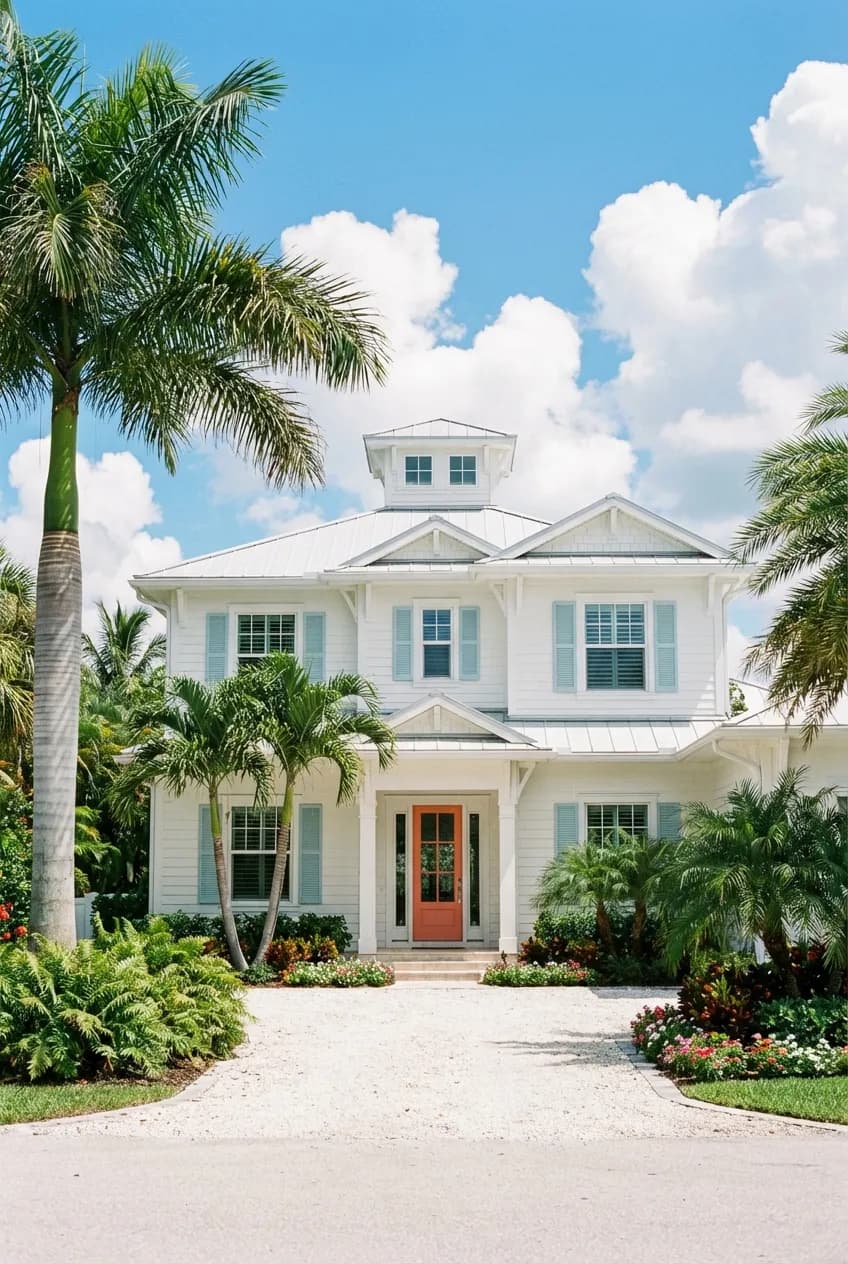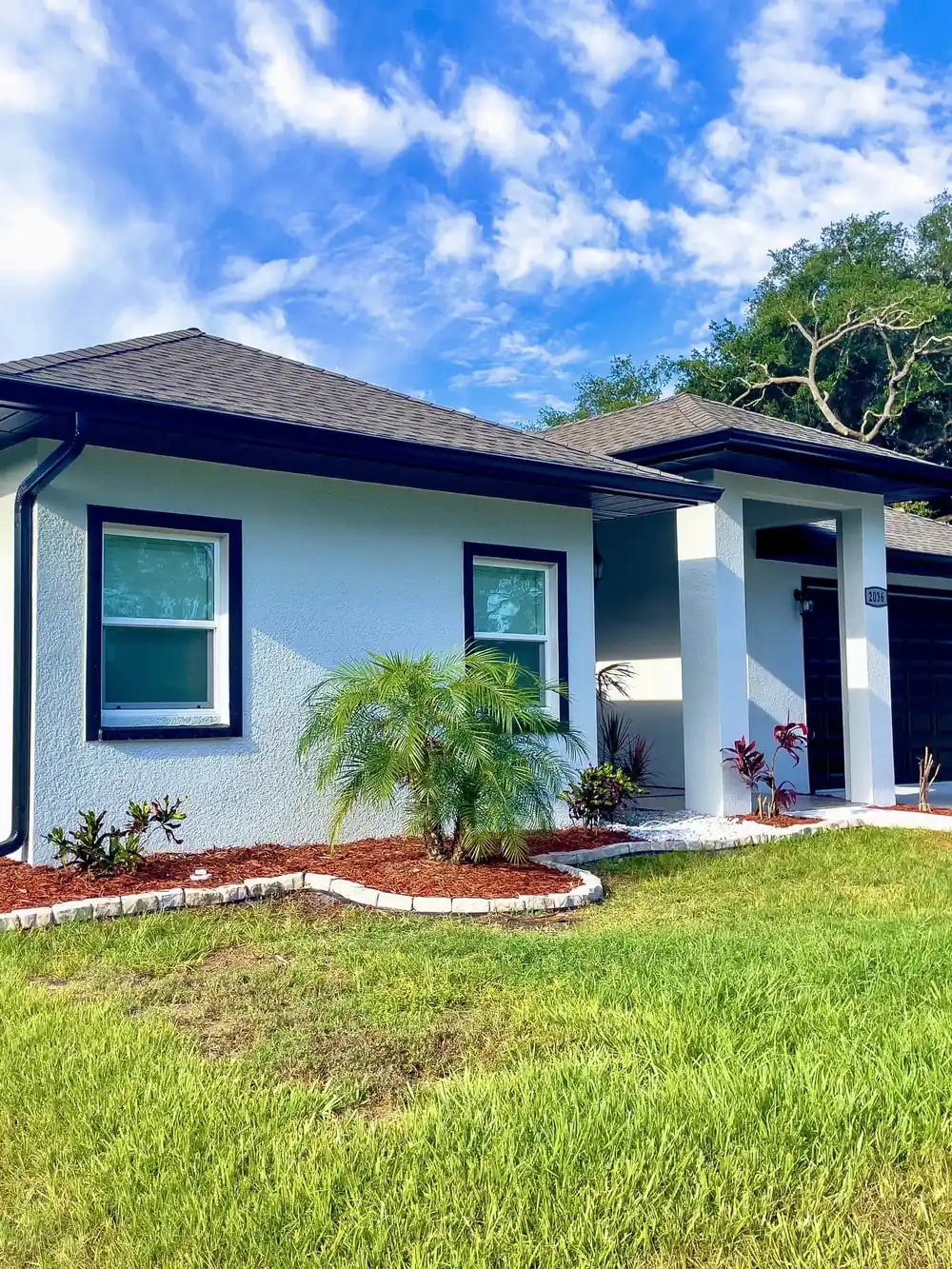
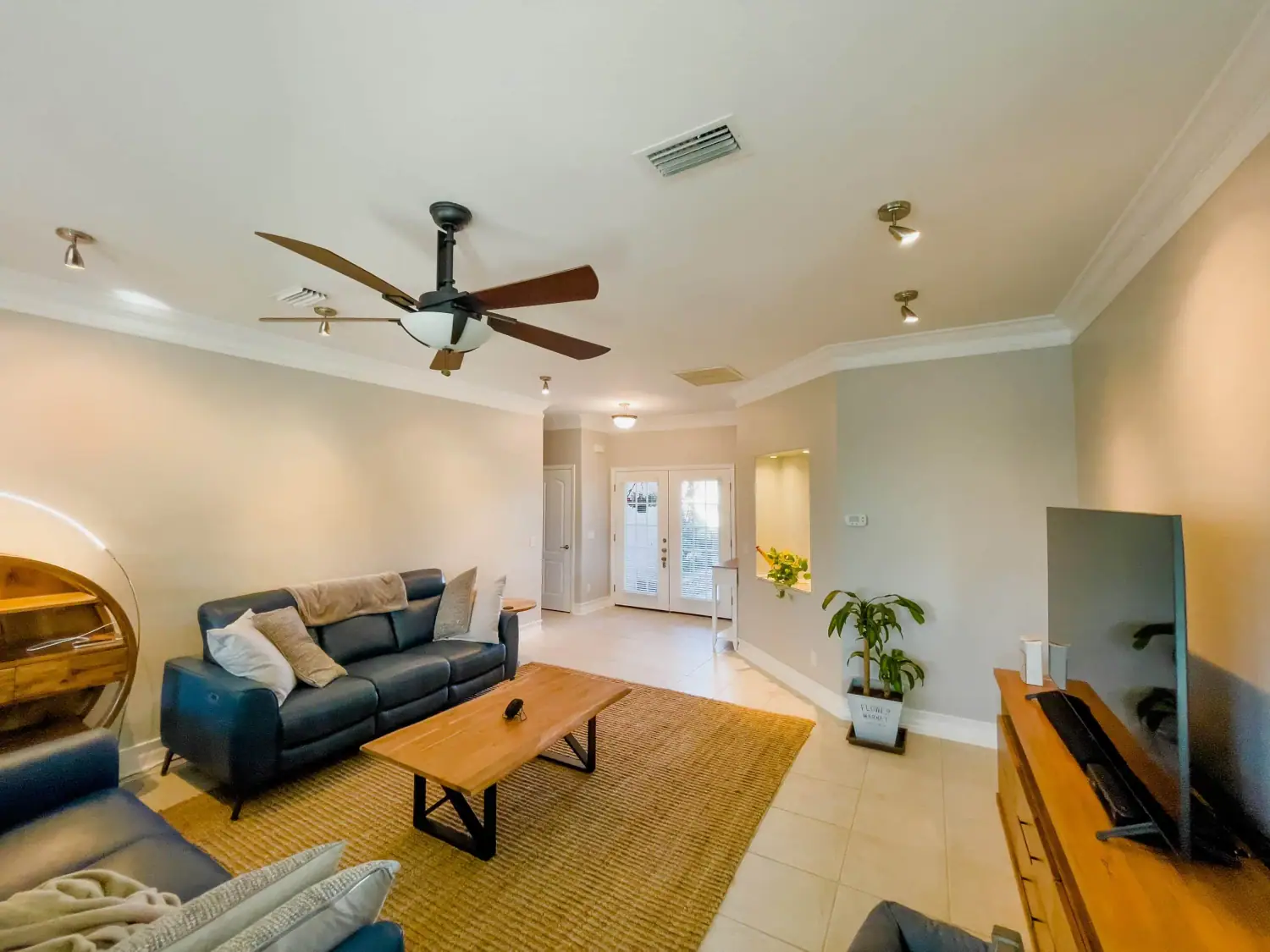

The best interior paint for a Florida home is not one universal shade. Your best result comes from a color that relates to the flooring, counters, furniture, and changing daylight in the space. Large boards viewed where you live help turn those pieces into a single plan.
A tiny chip is useful for narrowing the field, but it does not show the full look across a broad area. This guide explains how to compare a paint color, choose the proper coating, and build a connected palette without chasing each current trend.
Start with light when choosing colors for Florida interiors
Begin with the materials that will remain: tile, stone, cabinets, flooring, counters, fabric, and wood. Those items set the undertone boundaries. A fresh paint choice should support them rather than force an expensive redesign around them.
Next, study the space in the morning, later in the day, and after lamps are switched on. Move boards between a sunlit wall and a shaded corner. Grove Street Painting uses full-size color sample boards in the homeowner's actual light, so the decision is based on the space rather than a store display.
A practical test has five steps:
- Record the fixed finishes that will stay.
- Narrow the field to two or three families.
- Compare large samples beside the fixed materials.
- View each option in daylight and under lamps.
- Select the coating and sheen after the color is settled. For a project-specific plan, start with Sarasota interior painting.
This process makes choosing simpler. It also shows whether one selection will connect nearby spaces or whether a separate area needs its own answer.
How Florida's climate, humidity, heat, and salt air affect color
In Florida, account for strong daylight, air conditioning, humidity, and the view outside. These factors do not dictate a single palette. They tell you where and when to test so you see the appearance you will actually live with.
Note which windows receive direct Florida sun and which sides stay shaded. If a pool deck or pale paving is visible, include that reflected view while comparing boards. Check the same spot again after sunset. The goal is not to predict color from a label; it is to observe the result in place.
Moisture also changes how a space is used and cleaned. A bath, kitchen, entry, or laundry zone may need a durable finish that fits its cleaning routine. Ask for a specific coating system instead of assuming one sheen belongs throughout the house.
Florida's climate also makes it important to separate indoor and outdoor specifications. Exterior coatings face a different setting, so an exterior comparison belongs in its own plan rather than being copied into an indoor schedule.
Warm whites, gray, dark colors, and other options
Soft whites are a flexible starting point when you want a luminous background without a stark effect. Compare a pure-looking white with a warm sample beside trim and tile. The fixed materials will quickly show which direction belongs in the home.
Sand, taupe, and warm gray can form a quieter base around stone, wood, and woven furnishings. If cool gray turns flat beside the floor, move toward a warmer neutral instead of adding more unrelated colors.
Muted blue and green offer a coastal reference without requiring a themed design. They often support a calm palette, while deeper or dark colors are better tested in a defined feature area before they spread through adjoining spaces.
For an immersive approach, read the article on color drenching choices. If you are looking at a deeper feature area, compare the advice on dark room palettes.
Choose color by room and surface
A whole-house plan does not require all areas to match. It means open doors and long sightlines feel connected. Put the calmest section of the palette in shared spaces, then give smaller areas a more specific role.
Living areas and the main house palette
Start with what you see from more than one doorway. One neutral can connect the living area, dining space, and hall while rugs, art, and upholstery provide contrast. Move the sample from wall to wall if the exposure changes across the area.
An accent works best when it has a purpose, such as framing built-ins or defining a dining zone. Tie it to a material already present instead of treating it as an isolated paint job.
Bedrooms and offices
Bedrooms usually benefit from lower contrast and a restrained palette. Muted blue, green, or a gentle neutral can create a settled background without imposing one design style. In an office, view the candidate behind and beside the screen to check glare and background contrast.
Even the best daytime selection still needs an evening check. Judge it under the lamps that are normally on at night, not only in midday light.
Kitchens, baths, and high-moisture spaces
Kitchens and baths contain many fixed elements. Hold the sample beside cabinet fronts, counters, backsplash, tile, and metal finishes. A direct comparison gives better results than viewing it from the opposite side of the space.
Cleaning needs matter in busy areas. Duration is Grove Street Painting's standard product. Emerald and Aura are available upgrades. Emerald is under 50 g/L VOC, while Aura uses zero-VOC Color Lock technology.
Types of paint, brands, finishes, and durability
Keep the label tied to the application. Latex paint, wall coatings, and trim coatings are not interchangeable names for one item. The proposal should identify the brand, product line, sheen, and surfaces receiving it.
Duration is the standard wall coating. Emerald and Aura are available upgrades when their characteristics fit the scope. Choosing a quality paint is only part of the decision; the existing condition and prep process still have to support proper adhesion.
Many people ask for the most popular color or the best paint, but neither phrase settles the decision. The right answer depends on what the Florida home already contains, how the area is used, and what looks balanced at a different time of day. Choosing paint for interior walls starts with those observations, not a list labeled as a yearly trend.
Once you choose paint color, compare the types of paint listed for the intended location. Interior paints, paint coatings, and satin finishes each describe a type or component of the specification. The selected line should be formulated for the substrate, and the schedule should state how the new coat of paint will be applied.
Ask how the paint can support cleaning and how the coating will protect high-touch zones. The proposal should name what the paint provides, where it goes, and what prep helps it bond. That level of detail gives you more value than a broad promise.
Physical paint samples help you find the right interior paint because a screen preview cannot reproduce your exact materials and lamps. Benjamin Moore paint and Sherwin-Williams lines should both be viewed in place if they are finalists. Compare the boards at a set time to see whether one option feels too pure or begins to fade into nearby materials.
Select the coating after the palette is approved. This keeps the color discussion separate from the technical specification and makes it easier to compare paint brands, available sheens, VOC information, and durability for each space.
The written workmanship warranty is tied to the documented coating system. Grove Street Painting provides 5 or 10 years by system: SuperPaint carries 5, while Duration, Emerald, and cabinet 2K polyurethane carry 10. The exact term should appear in the proposal and closeout packet.
Indoor and exterior paint are different jobs
Do not move an outdoor recommendation directly into an indoor plan. Exterior painting may involve stucco, siding, trim, fascia, doors, shutters, railings, pool cages, lanais, or decks. Indoor services cover a different set of substrates and daily-living needs.
The same separation applies to house paint, deck paint, and exterior paint colors. Heat, fading, water exposure, mildew, mold, and outdoor maintenance belong in an exterior conversation. They should not crowd out the practical questions about indoor illumination, traffic, cleaning, and existing materials.
If a label says acrylic latex or identifies a paint primer, verify the intended substrate and location before it goes into the schedule. The painter should state where the new paint goes and how the surface will be prepared so the paint adheres properly.
Painting services, prep, and protection
Grove Street Painting's indoor services include walls, ceilings, trim, millwork, accent features, and drywall repair. The written scope should list the included surfaces before the crew arrives.
Good prep protects the result and the way your household uses the property during the job. Grove Street Painting performs HEPA sanding, assigns background-checked crews trained in PCA standards, completes daily cleanup, and resets the work area before leaving.
Desmond Landry personally walks the property before quoting. He has more than 20 years of residential painting experience and is a second-generation craftsman. The company uses fixed pricing, so the estimate price is final unless you request a documented scope change.
A coating system also carries written protection after completion. Coverage includes peeling, blistering, cracking, and adhesion issues when Grove Street Painting installed the approved system under the approved scope.
Find the right coating and request an estimate
Create a simple schedule before painting starts. Record the approved color and code, coating line, finish, and substrate for each area. Keep the approved boards nearby through the final walkthrough so the team and homeowner share one reference.
For a professional plan, Grove Street Painting can bring full-size boards into your actual lighting, identify the system in a fixed-price proposal, and complete a daily reset during the job. Interior estimates are returned within 48 hours, and the minimum project size is $1,500.
Request an estimate when you are ready to compare finalists on site. You will know the included services, specified products, warranty term, and fixed price before work begins.
See Paint Colors on Your Actual Walls
Stop guessing which colors will look best. Upload a photo of your room and preview 80+ premium paint colors instantly - it's free and takes 30 seconds.
Frequently Asked Questions
Soft white, sand, pale blue, and muted green are useful options to sample. Compare each paint color beside your flooring, counters, fabrics, and trim because those fixed materials shape the final look.
Put a large paint sample in the actual space and move it between bright and shaded spots. Check it in daylight and after the lamps are on. Grove Street Painting provides full-size sample boards so you can compare the result in your home's real lighting before painting begins.
Sherwin-Williams Duration Interior is the standard product. Upgrade options include Sherwin-Williams Emerald and Benjamin Moore Aura. The proper line and finish depend on traffic, cleaning needs, and the condition of the area being painted.
Services may cover walls, ceilings, trim, millwork, accent walls, and drywall repair. Crews perform HEPA sanding on every surface, follow PCA preparation standards, and complete a clean daily reset. Desmond Landry personally walks the property before quoting the project.