
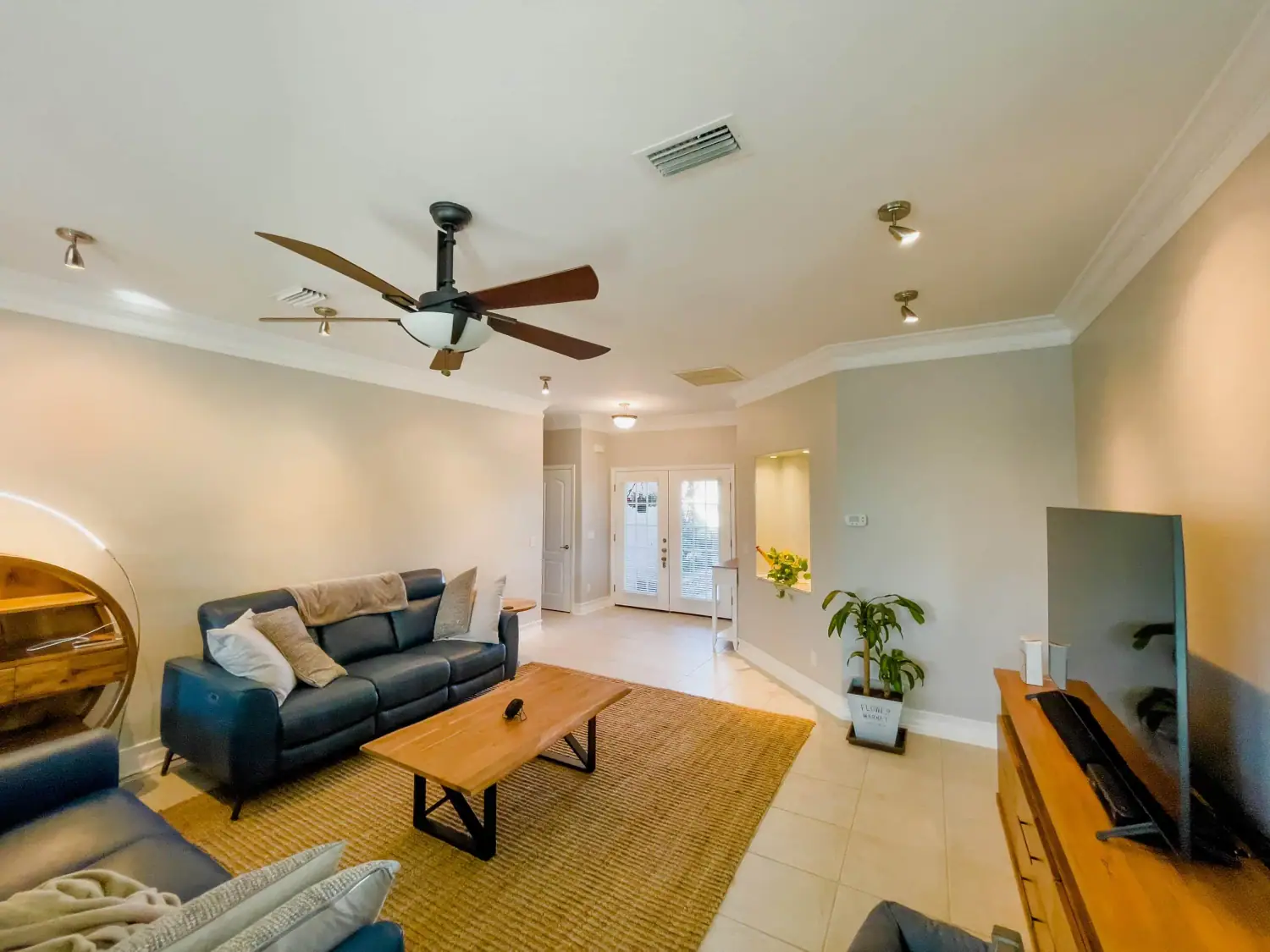

If you are asking why colour drench, the answer starts with how you want the room to feel.
One coordinated color on the walls, trim, doors, and ceiling reduces sharp visual breaks, so the color becomes the setting rather than one feature. For help turning that idea into a practical finish plan, explore Sarasota interior painting.
Color drenching carries the same color, or neighboring tones, across most surfaces.
The effect may feel quiet, close, dramatic, playful, or restful depending on the value, undertone, sheen, furnishings, and light. That is why colour matters, but the complete plan matters more.
How One Color Changes the Room
A standard room often has white trim, a separate ceiling, and wall color broken by openings or built-ins.
An all-over scheme softens those lines. Your eye may notice the shape of the room, the furniture, and the way daylight moves over each surface before it notices the border around every feature. That more unified look is one reason this design choice may create a strong mood without adding more decor.
Value sets the sense of openness. A pale tone may make a small room feel lighter, while a deep tone may make it feel enclosed and intimate.
Neither direction is automatically good or bad. Think about what the room is for. A bedroom used for winding down may suit a quieter tone. A dining room meant for long evenings may support something richer. A powder room can carry more intensity because you use it for shorter periods.
Undertone changes with the day. Sarasota sunlight may reveal warmth, coolness, or gray that was easy to miss on a color card. Lamps may shift the same paint again after sunset.
View a full-size sample in morning sun, indirect afternoon light, and evening light. Grove Street Painting uses full-size sample boards in your actual light, which lets you compare the choice without guessing from a small chip.
Sheen controls how surfaces respond. You do not need one finish on everything to keep a unified color.
The walls, ceiling, and trim have different wear and reflection needs. Keeping the hue related while choosing the right sheen for each surface helps preserve the all-over idea and still gives the finish a practical job.
A color-drenched room does not have to be dark. Muted blue, soft green, warm taupe, clay, or a gentle neutral may make the space feel settled without turning it into a cave.
A stronger color may also work when the lighting, floor, and furniture give it enough balance. Instead of asking whether a color is too bold on its own, ask how it behaves in the whole room.
Plan the Mood Before You Paint
Start with a feeling, not a color name. Write down what you want from the room at the time you use it most. Then follow this order:
- Name the mood in plain words, such as calm, focused, social, warm, or playful.
- Check the room at morning, midday, and night to see how the light changes.
- Compare a lighter and darker version of the same family on a large sample.
- Review the walls, ceiling, trim, doors, floor, and fixed finishes together.
- Choose the sheen for each surface before the finish plan is final.
Calm usually comes from restraint. Lower contrast, a controlled undertone, and softer lighting may feel more comfortable to live with than a very bright scheme.
If the home already has busy flooring, patterned fabric, or strong art, a simpler background gives those pieces room. If the furnishings are quiet, the paint may carry more of the personality.
Energy comes from clarity. A clearer green, blue, terracotta, or other dominant color may make a social area feel more expressive.
Test it on more than one wall. A color that looks balanced on a single board may feel much stronger once it reaches the ceiling and woodwork. The goal is not to avoid impact. It is to know what level of impact you are choosing.
Bedrooms are a useful place to explore this approach because the mood goal is usually clear and the lighting is easier to control. See these bedroom drenching ideas for ways to shape a more restful retreat.
Before choosing the final color, also review the common drenching mistakes that may leave a unified scheme feeling flat, heavy, or unfinished.
The finish plan should be just as deliberate as the color plan. Grove Street Painting provides an on-site walkthrough before quoting, and Desmond Landry personally walks the property.
The written proposal carries line-item costs, and the price-lock promise means the estimate price is the final price if the approved scope does not change. Daily cleanup includes protected floors, covered vents, and work areas reset before the crew leaves.
Color drenching works best when the chosen shade, sheen, preparation, and daily use of the room support one another. Decide how you want to feel, test the choice in real light, and look at every surface as one composition. If you are ready to compare finishes in your own space, request a color consultation and a locked-in price from Grove Street Painting.
See Paint Colors on Your Actual Walls
Stop guessing which colors will look best. Upload a photo of your room and preview 80+ premium paint colors instantly - it's free and takes 30 seconds.