
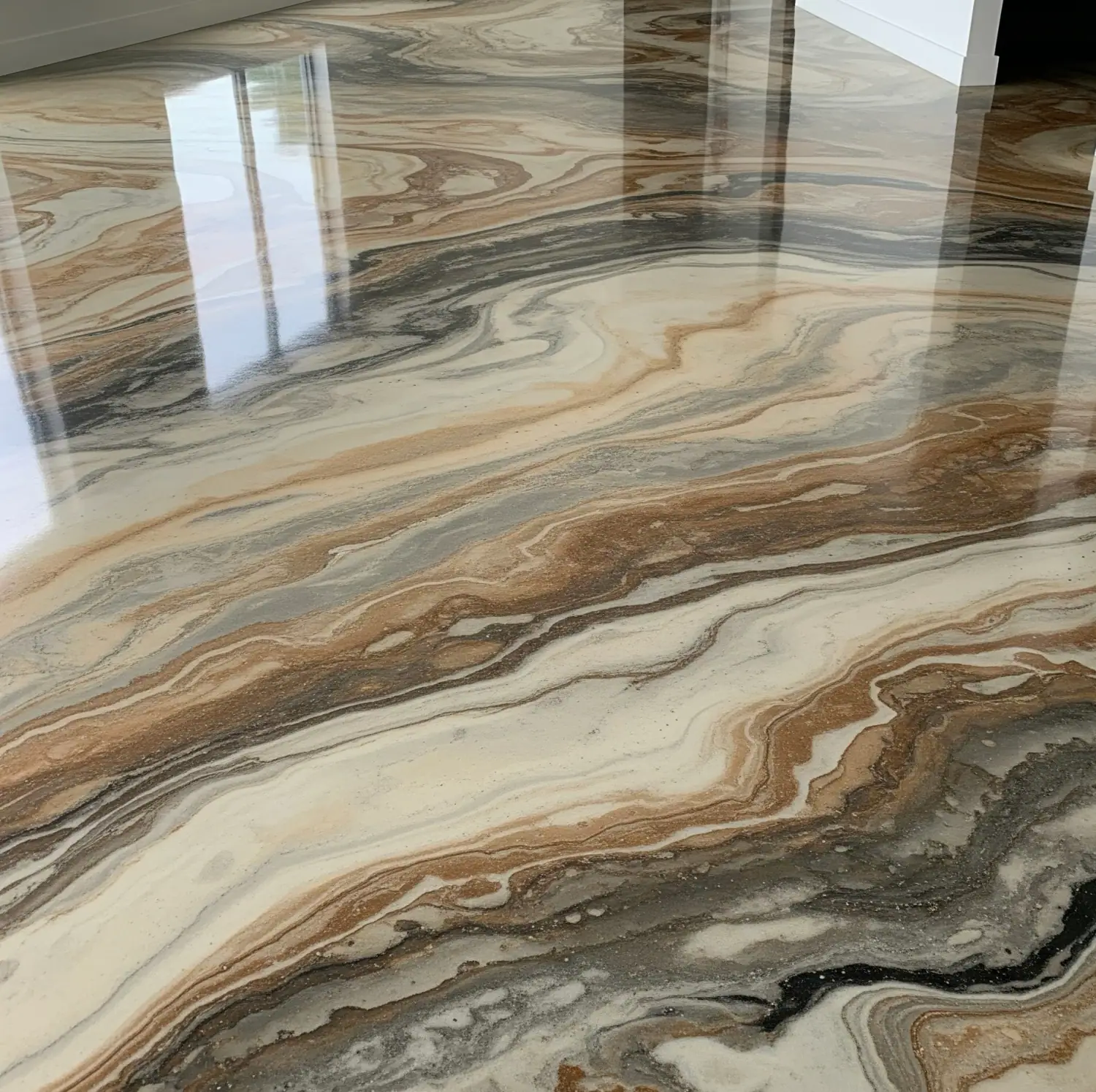

If you are comparing diy vs professional garage coatings in florida, start with the concrete, not the kit label. A garage floor coating service is a full process: surface prep, compatible materials, controlled application, and written support. Whether the product says epoxy or polyaspartic, a DIY epoxy project puts those decisions, the effort, and the result in your hands.
The right route depends on how you use your garage, what shape the slab is in, how much time you can give the epoxy process, and how much repair risk you want to carry. This epoxy guide gives you a practical way to compare both routes without assuming one answer fits every home.
Start with the slab, not the kit
Check the concrete for old sealer, paint, oil, cracks, or weak areas before choosing a coating. Then compare the prep each route puts in writing instead of judging the options by color alone. Grove Street Painting uses diamond-grind surface preparation for garage floors, then selects the coating system for the approved scope.
| Compare | DIY route | Professional route | Ask before choosing |
|---|---|---|---|
| Surface | You inspect and prepare it | Installer evaluates and prepares it | What must be removed or repaired? |
| Materials | Limited to products you select | System is specified in writing | Which layers and topcoat are included? |
| Support | Product terms guide the remedy | Proposal states workmanship coverage | Who handles an adhesion issue? |
When DIY can make sense
DIY epoxy can fit a small project when the space is not critical, the concrete is sound, and you are comfortable owning every stage. It is also easier to accept on a floor where a future correction would not disrupt daily parking.
- Low-consequence area: A test space gives you room to learn.
- Sound concrete: The slab has no obvious coating or repair problem.
- Available time: You can clean, prepare, apply, and protect the cure window.
- Suitable product: The material matches the surface and intended use.
- Repair tolerance: You accept that a failed DIY attempt becomes your next project.
Before buying a DIY epoxy kit, read the full product instructions. Check what tools are required, how the floor must be prepared, what temperatures the product allows, and how long the space must stay clear. If any step is uncertain, resolve it before opening the coating.
When professional installation fits
Professional installation fits when you want one party responsible for evaluating the floor, defining the system, and completing the work. It also helps when your residential garage has existing paint, surface damage, or a finish goal that depends on consistent flake and topcoat coverage.
- Mechanical preparation: The written scope identifies diamond grinding.
- System selection: The proposal identifies the materials and approved scope.
- Coordinated process: Prep, repairs, coating, and cure protection follow one plan.
- Finish control: Custom flake blends give you a defined color direction.
- Written support: The applicable workmanship warranty is tied to the documented system.
Grove Street Painting offers a written workmanship warranty of 5 or 10 years by coating system. For epoxy floor work, the documented garage coverage includes coating adhesion, delamination, and UV stability. Your proposal and closeout packet identify the products and warranty that apply to your project.
Compare the process
Surface preparation changes the job
Do not stop the comparison at who rolls epoxy onto the floor. Ask who owns the decisions before, during, and after application. Treat prep as its own stage: define the surface condition, the cracks or damaged areas in scope, and the material already on the slab.
- Inspection: Identify old coatings, repairs, and visible damage.
- Cleaning: Remove dirt and contamination from the work area.
- Grinding: Mechanically prepare the concrete where the system requires it.
- Repair: Address cracks or weak areas included in the approved scope.
- Dust control: Clear residue before the next material is installed. The right tools may not be part of a kit, so professional installers bring this process into the job plan instead of treating it as a quick step.
Materials and finish affect daily use
Do not use "epoxy" as the whole specification. Ask for the actual primer or base, build coat, decorative broadcast, and topcoat instead of comparing names alone.
- Primer or base: Confirm what bonds directly to the prepared surface.
- Build coat: Ask how the main layer fits the full system.
- Decorative flake: Choose the blend and amount used in the finish.
- Topcoat: Confirm the wear layer and its UV resistance.
- Care notes: Keep the documented cleaning and maintenance guidance.
Grove Street Painting uses UV-stable polyaspartic and polyurea systems for garage flooring and offers custom flake blends rather than treating epoxy as the only product approach. Those details give Sarasota homeowners a concrete way to compare UV exposure, vehicle use, and finish options.
A note on epoxy and polyaspartic systems
You do not need to become an epoxy chemist. You do need a clear list of layers, products, prep, and written coverage. That keeps the comparison specific and stops a familiar product name from standing in for the whole installation.
- Product names: Record the brand and system named in the proposal.
- Layer sequence: Confirm the order from prepared concrete to topcoat.
- Finish selection: Write down the chosen color and flake blend.
- Warranty term: Match the term to the approved coating system.
- Care guidance: Keep the closeout notes for future maintenance.
Compare time, risk, and support
An epoxy kit price is only one part of the decision. Your time, tool access, garage downtime, appearance expectations, and responsibility for corrections also belong in the comparison. A professional quote should make the scope easier to compare, not harder. Grove Street Painting requires an on-site walkthrough before quoting, and Desmond Landry personally walks each property. The written proposal carries line-item costs and a fixed-price promise, so the estimate price is the final price for the approved scope.
- Tool access: List what you own, rent, or still need.
- Hands-on time: Include prep, application, and cleanup.
- Garage downtime: Plan where vehicles and stored items will go.
- Finish expectations: Decide how consistent the color and flake must look.
- Correction plan: Know what happens if the coating does not bond as expected.
- What condition is the concrete in now?
- What exact preparation will the surface receive?
- Which materials and finish layers will be installed?
- What written remedy applies if the system has a covered problem?
- Access plan: Clear the garage and protect items that remain nearby.
- Product check: Match every container to the written system.
Before the work starts, settle the remaining logistics in writing.
- Schedule check: Protect the application and cure window.
- Closeout check: Keep products, colors, care notes, and warranty terms.
- Contact plan: Know who answers questions after the installation.
For a separate look at budgeting, read the Sarasota coating cost guide. If appearance is your next decision, compare Florida garage floor colors before choosing a flake blend.
Questions homeowners ask
Is DIY always the wrong route? No. DIY can be a reasonable option when the area is small, the concrete is straightforward, and you are comfortable with the tools, process, and repair risk. The point is to choose it with a complete view of the work.
Is professional installation only about convenience? No. Convenience matters, but the larger difference is responsibility. One installer evaluates the slab, defines the materials, performs the preparation, applies the system, and documents the applicable warranty.
How do I compare two professional options? Ask each installer to name the preparation method, every coating layer, the finish, the care guidance, the fixed scope, and the written warranty. If one answer stays vague, the prices are not yet describing the same job.
What should I do next? Start with the floor itself. Get your garage floor quote for an on-site assessment, a written system, and a locked-in price for the approved scope.
See Paint Colors on Your Actual Walls
Stop guessing which colors will look best. Upload a photo of your room and preview 80+ premium paint colors instantly - it's free and takes 30 seconds.
Frequently Asked Questions
It can be a reasonable route for a small, low-consequence space if you can prepare the concrete, follow the product limits, and accept the repair risk. For a vehicle-used garage, compare the slab and coating specification before deciding.
Grove Street Painting uses diamond-grind surface preparation, UV-stable polyaspartic and polyurea systems, and custom flake blends. Your written proposal identifies the approved system and the applicable warranty term.
Compare the concrete condition, preparation method, materials, application window, desired appearance, written warranty, and who handles a coating problem.