

Interior Painting Cost: Start With the Scope
If you are planning a repaint in Sarasota, start with published pricing of $2 to $6 per square foot for walls. Most three-room projects cost $2,200 to $3,800. Those figures are useful starting points, not a quote for every home. A written Sarasota interior painting proposal requires an on-site walkthrough because the same square footage can hide varying prep, access, and coating requirements.
The cost to paint a home interior is based on the painted area and the full scope, not floor area alone. Two houses with 2,000 sq ft can have varying wall area, room count, ceiling height, trim, doors, and patching demands. One may need a simple color refresh. The other may require drywall repair, stain-blocking primer, multiple coats, and careful painting around furniture.
Grove Street Painting has a $1,500 minimum job size to book. We advise combining services to meet the minimum and get the most value. A professional paint job commits a project manager and two painters, along with planning, estimating, and scheduling time. Combining several compact spaces, overhead work, or trim can get more from that minimum.
Average Cost and Wall Rates
An average interior painting cost can help set a budget, but it cannot show the condition of your walls or the labor involved inside your house. Cost per square foot is most useful when you compare the same scope. A walls-only figure should not be compared with a proposal covering ceilings, baseboards, crown molding, doors, patching, primer, and two topcoats where specified. Interior painting costs vary because each house interior has a distinct mix of painted elements and requirements. Common interior painting factors include wall condition, ceiling height, trim profiles, access, and color count. Interior paint quality and the specified coating system also change the cost.
For quick planning, apply the published wall rate and then list every additional area you want painted. The painting cost calculator can organize your room count and scope before a walkthrough. It is a planning tool, while the written proposal sets the total for the actual scope.
A Practical Cost Breakdown by Home Size
Home size matters, but square footage does not tell the whole story. A home with 1,000 sq ft and many divided spaces may have more corners, doors, and trim than an open house with 1,500 sq ft. A house with 2,000 sq ft may have standard eight-foot ceilings, while another interior with 2,000 sq ft has a two-story living room. A home with 3,000 sq ft can also have large open areas that are more efficient to paint than several divided spaces. Depending on the layout, the smaller home can require more cutting-in time per square foot.
Room Dimensions and Floor Area
Measure each room, note the ceiling height, and mark which sections are in scope. If you want a more focused explanation of wall measurements, see the guide to cost per square foot. Do not multiply floor area by a rate and assume the result covers every painted component. Wall square footage, coating details, access, and prep determine the effort.
| Scope item | What changes the cost | What to confirm |
|---|---|---|
| Walls | Wall area, repairs, color, and coats | Rooms and surfaces included |
| Ceilings | Height, texture, stains, and access | Primer and finish system |
| Trim and doors | Profiles, condition, and number | Prep and type of paint |
| Occupied rooms | Furniture, protection, and daily reset | Access and work sequence |
For a 1,500 Sq Ft House
Painting a 1,500 sq ft house does not have one safe flat total without a defined scope. The estimated cost changes if the job is walls only, a full interior, or selected sections with overhead work and trim. Ask the painter to separate those choices so you can see their impact on the interior painting budget.
For a 2,000-Square-Foot Home Interior
A 2,000 sq ft interior also requires an in-person review. Open plans can reduce setup time, while high overhead sections, stairwells, detailed millwork, or wall damage can add labor. The cost range becomes reliable only after the contractor confirms the painted portions, products, and preparation in writing.
A 6,000 sq ft home calls for the same discipline at a larger scale: define each zone, painted area, access point, and coating system before comparing estimates. Home size helps with early planning, but a room-by-room scope gives you a better figure than an average house-size formula.
Factors That Affect the Cost of Painting
Walls, Ceilings, Trim, and Interior Doors
Walls are only one part of many interior painting projects. Adding ceilings, baseboards, crown molding, window trim, built-ins, or interior doors increases substrate preparation and coating time. Intricate profiles take longer to sand, clean, mask, and coat than broad expanses. A proposal should state what is covered instead of leaving you to guess.
Prep Work, Repairs, Primer, and Coats
Wall condition has a direct impact on labor. Nail holes and small dents differ from loose tape, failed patches, water staining, rough texture, or damaged drywall. Repair interior walls before finish paint goes on. HEPA sanding helps control dust, while the right primer can block stains or support adhesion where the existing substrate requires it.
Color changes also affect the cost. Moving from a dark color to a much lighter one may require a specific primer or additional coats. A similar-color refresh may need less material and time. Interior paints also vary by product and sheen. Full-size color sample boards let you choose a fresh color in your home's interior light before production begins, reducing the risk of a late color change.
Access, Furniture, and the Daily Living Area
An occupied home needs a clear plan for furniture, floors, vents, and room access. Tall stairwells and high ceilings require additional setup. Grove Street Painting uses a Home Protection Ritual: floors are protected, vents are covered, work zones are cleaned, furniture is reset, and rooms are reopened before the crew leaves each day. That daily cleanup is part of the service, not an optional line item added after painting begins. You also receive an end-of-day text and photo update. If you live in the space during the project, those steps can matter as much as production speed because you know what was completed and what area comes next.
Room Count and Project Sequence
Room count affects setup, cutting-in, and the order of painting. A whole-house repaint may be sequenced to keep part of the home living-ready. A compact job may combine a bedroom, hallway, and living room to meet the minimum. The best sequence follows your household priorities and the parts being painted, not one fixed schedule.
Paint Quality, Materials, and the Production Schedule
Standard Paint and Premium Upgrade Options
Grove Street Painting uses Sherwin-Williams Duration Interior as the standard wall paint. Sherwin-Williams Emerald Interior and Benjamin Moore Aura Interior are available as upgrade options. Different paints have different finish, washability, and product characteristics, so the right choice depends on the room, surface, sheen, and how you use the space.
The cost of paint is only one piece of a professional painting estimate. Labor covers protection, preparation, application, daily reset, and inspection. Materials can also consist of caulk, patching products, primer, masking paper, plastic, tape, sanding supplies, and other items needed for the approved scope. A low materials cost does not make incomplete prep a better value, and a higher product cost does not correct a poorly prepared substrate. When comparing interior painting services, ask whether the same spaces, painted areas, products, and protection are covered. Some painting services may cover walls only, while another proposal covers trim or ceilings. That difference can look like added expense until you compare the actual work.
Labor Time and the Painting Schedule
Time depends on scope, patching, access, drying between coats, and the area count. Typical timelines are below; the production start is subject to the scheduled start date.
| Project | Typical time |
|---|---|
| Three-room interior | 3 to 4 production days |
| Whole-home interior | 5 to 7 production days |
| Production start after signing | 2 to 3 weeks |
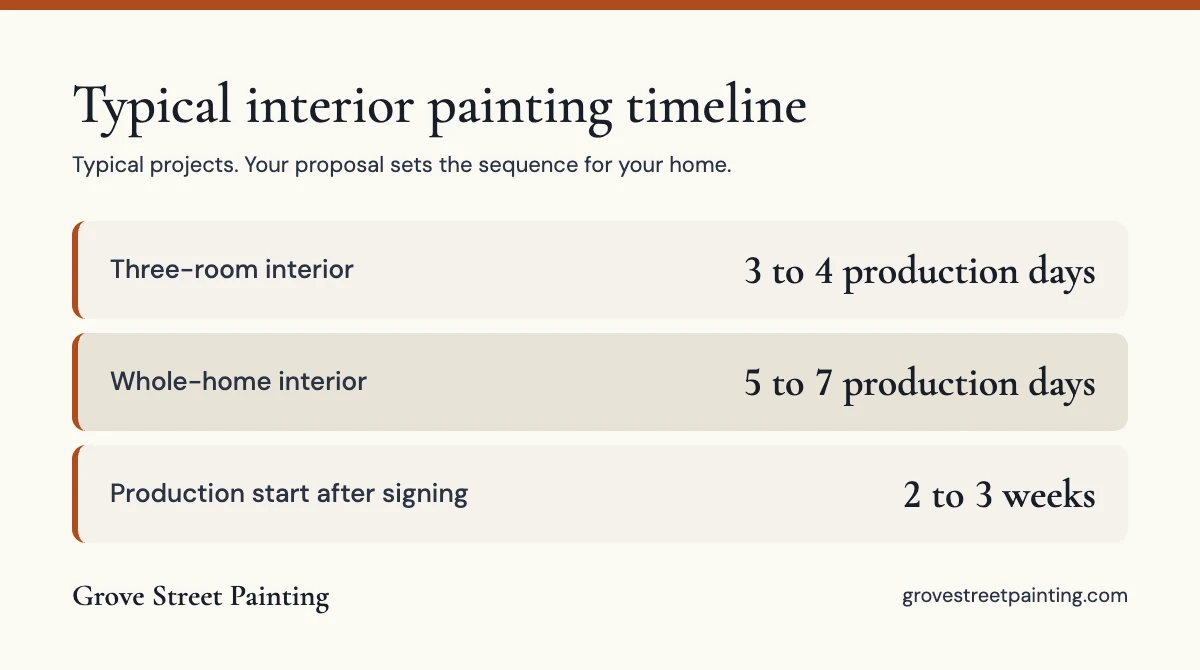
Those timelines describe typical projects, not a promise that every house will follow the same schedule. Extensive restoration, special finishes, occupied-room sequencing, or a larger scope can require more time. Your proposal and pre-start plan should explain what the crew will paint, the expected sequence, and any access you need to provide.
Finish System and Written Warranty
The written workmanship warranty is tied to the coating system.
| Coating system | Term (years) |
|---|---|
| SuperPaint | 5 |
| Duration | 10 |
| Emerald | 10 |
The approved products, colors, sheens, and care notes are documented in the proposal and closeout packet, so the coverage matches the coating system installed in your home.
Warranty coverage addresses peeling, bubbling, and adhesion issues when Grove Street Painting prepared and coated the area under the approved scope. It is not a general promise that every mark or future repair is covered. Ask questions about the selected product and written term before you approve the work.
DIY Interior Painting or Hiring a Crew
DIY interior painting can make sense when you have a small, simple space, the walls are sound, and you have the time and tools to prepare it correctly. Your cost of materials may include much more than paint: patching compound, caulk, primer, brushes, rollers, trays, tape, floor protection, sanding supplies, ladders, and cleanup materials. Before you paint the interior yourself, look closely at the surfaces. You may need to repair cracks, remove failed patches, sand rough areas, clean contamination, or use a specialty primer. The finish will only be as sound as the preparation beneath it. Painting tips cannot replace an inspection when there is active water damage or an uncertain substrate.
When a Painting Crew Is the Better Fit
Hiring professional painters can help when the scope covers several spaces, tall areas, intricate trim, occupied-home protection, or a firm schedule. Background-checked Grove Street crews train on PCA surface preparation standards. Desmond Landry, the owner, brings more than 20 years of residential painting experience and personally walks each property before quoting.
A professional painting company should make the scope easier to understand. You should know which spaces and areas are listed, what patching is planned, which products will be applied, how many coats are needed for the specified result, and how the daily reset will work. Specific details let you compare the labor, not just the bottom-line total.
How to Prepare Your House
Ask what you need to move before the crew arrives. Remove fragile and personal items, identify special access requirements, and confirm how large furniture will be handled. Keep the color decision and approved scope available. A written start plan helps painting begin without avoidable delays and keeps the living areas easier to use.
If you are choosing between do-it-yourself work indoors and a hired crew, compare safety, prep, time, disruption, and coating requirements along with money. Painting your home one room at a time can fit some schedules, while a coordinated home interior repaint can give the crew a more efficient sequence. A focused wall refresh differs from a whole-home job with ceilings, doors, trim, patching, and multiple occupied spaces.
How to Get an Accurate Interior Painting Estimate
What a Detailed Estimate Should Include
An interior painting estimate should identify every room and painting surface, including walls, ceilings, trim, and doors. It should describe repairs, preparation, primer where needed, products, colors or sheen selections, coats required for the approved result, protection, daily reset, schedule, and written warranty term. If one proposal includes more work, its total should not be treated as equal to a smaller scope.
Grove Street Painting requires an on-site walkthrough before quoting. Desmond personally reviews the property, and interior estimates are prepared within 48 hours. The written proposal uses line-item costs so you can see the scope. The price-lock language is direct: "The estimate price is the final price. If we miss something after we start, that is on us - you are not paying for our mistakes."
Choose the Right Painting Contractor
When you hire a painting contractor, compare the defined scope, preparation, products, schedule, insurance, cleanup process, and coating-specific warranty. Grove Street Painting is licensed and insured with $2 million in general liability coverage and has BBB A+ accreditation. Those facts support due diligence, but the proposal still needs to match your exact home and project.
Be cautious with an estimate based only on an online form or a single floor-area number. Ask what could change the price and whether those items were inspected. With Grove Street Painting, the price you get is the price you pay for the approved scope. There are no surprise fees because missed scope after the start is not passed to you.
What to Ask About Interior Painting Costs
Common questions about interior work cover whether ceilings are included, how repairs are priced, which type of paint will be used, how long the work will take, and what happens if the crew finds something after the start. Put each answer in the proposal. That gives you useful cost data and a clear record instead of relying on a verbal range.
House painting costs vary with the inspected scope. If you want a firm number for your house painting project, request the on-site walkthrough and a written, line-item proposal. You will know the surfaces, prep, products, schedule, warranty term, and locked-in price before you decide.
Ready for a Professional Assessment?
Get a same-day written proposal with fixed pricing and a documented scope.
Frequently Asked Questions
Published Sarasota pricing is $2 to $6 per square foot for walls, and most three-room projects cost $2,200 to $3,800. The final figure depends on wall condition, repairs, ceilings, trim, doors, color changes, access, and the coating system. An on-site walkthrough is needed for a firm written total.
No. A painting cost estimator can help you organize spaces and painted areas, but it cannot inspect wall damage, access, ceiling height, or existing coatings. Grove Street Painting requires an on-site walkthrough, then provides an interior proposal within 48 hours with line-item costs and fixed pricing for the approved scope.
The written workmanship warranty is 5 or 10 years by coating system.
| Coating system | Term (years) |
|---|---|
| SuperPaint | 5 |
| Duration | 10 |
| Emerald | 10 |
Your proposal and closeout packet identify the approved product and the warranty that applies to it.
Related Resources
Ready for professional service?
Compare Interior Painting Options