


Sticky doors, worn edges, and peeling around the pulls are not problems you want to repeat. For high-traffic kitchen cabinet coatings, start with the finish system, surface prep, and application method as one decision. If you want help comparing those choices for your home, see our Sarasota cabinet refinishing process.
The short answer is direct: Grove Street Painting uses Renner or Milesi 2K polyurethane for its cabinet service. This two-component industrial wood finish cures into a hard film with moisture and chemical protection. It is built for the routine use a kitchen gets, and the approved cabinet 2K polyurethane system carries a 10-year written workmanship warranty.
A waterborne alkyd or acrylic enamel may still fit a homeowner-applied update. The right option depends on your doors, the existing surface, the tools you can use, and the result you expect. A product name alone cannot replace preparation or controlled application.
The short answer
The best finish is the one that matches how the room is used and how the material will be applied. A low-use vanity and a busy family kitchen do not ask the same thing from a film. Doors near the sink, cooktop, trash pullout, and dishwasher see repeated handling, moisture, food residue, and cleaning.
For a sprayed, factory-style result, 2K polyurethane is Grove Street Painting's standard. The two parts react during cure instead of relying only on air drying. That system gives the surface the hardness and resistance expected from an industrial wood finish.
For a brush or roller job, a waterborne alkyd enamel is a more practical category to review. It can be applied with tools many homeowners already understand, but the final look still depends on leveling, primer compatibility, coat thickness, and cure conditions. Read the current product data sheet before choosing a primer or recoat schedule.
Standard wall products are made for a different job. Cabinet doors are touched, wiped, and pulled every day. A finish that looks acceptable on drywall may stay too soft or show wear sooner on a door edge.
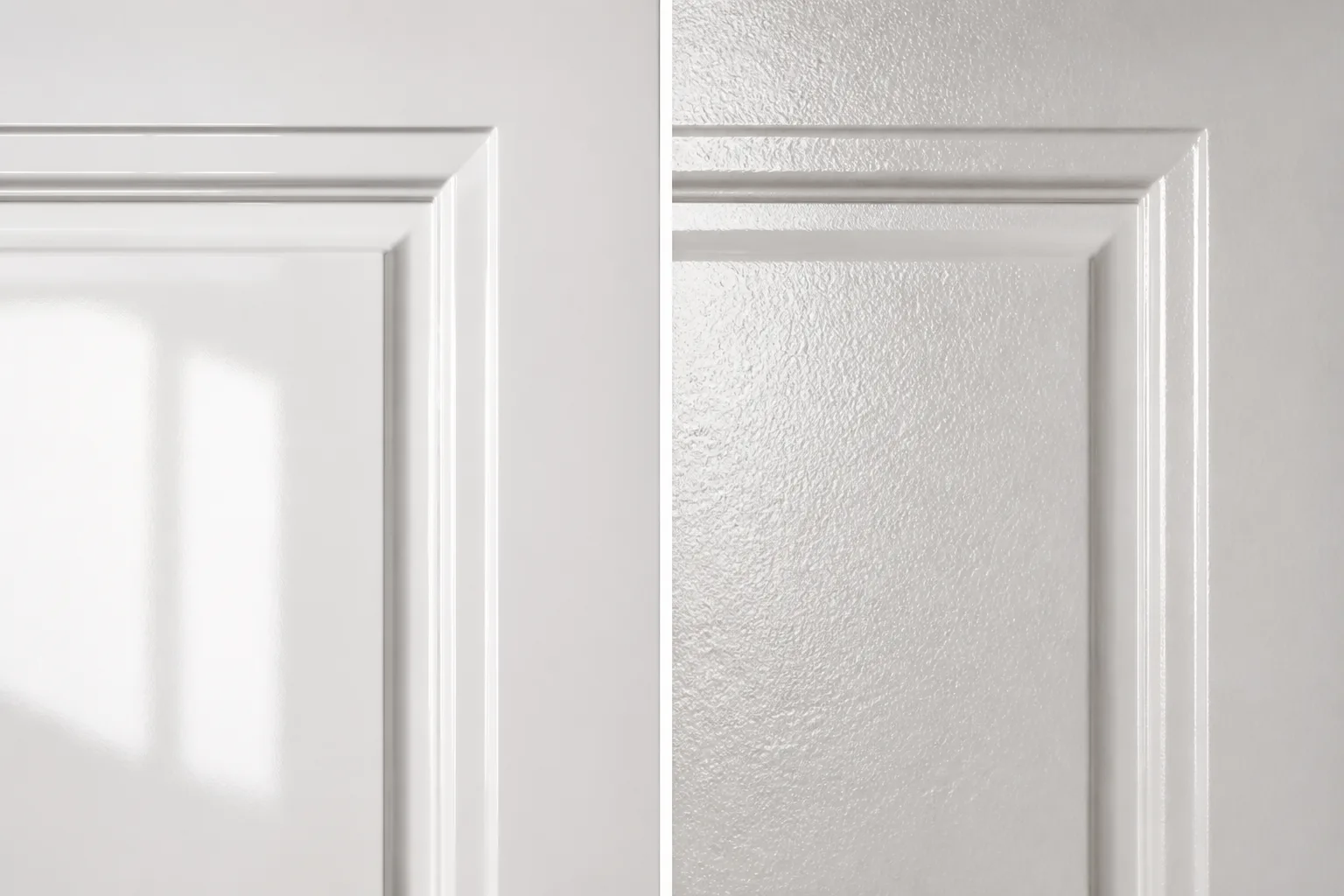
How the main systems compare
There is no single finish that wins every category. The useful comparison is not a shelf label against another shelf label. It is a complete system against the demands of your kitchen.
2K polyurethane
A 2K polyurethane has two components that are combined for application. GSP uses Renner or Milesi products made for cabinetry. The cured film is hard and resists moisture and common household chemicals.
This system belongs in a controlled process. The doors and drawer fronts need organized removal, labeling, preparation, and spraying. The frames need the same care so the sheen, tone, and texture read as one finished result when everything goes back together.
The main trade-off is that this is not the simple open-a-can route. It calls for the right equipment, material handling, and working conditions. That added control is part of why GSP selects it for a durable cabinet finish.
Waterborne alkyd enamel
A waterborne alkyd-urethane hybrid is one option homeowners compare for cabinetry. It may fit a homeowner-applied update that does not use a two-part shop system.
Do not treat every can in this category as interchangeable. Check the manufacturer's current instructions for cleaning, abrasion, primer, the chosen method, recoat time, and full cure. The label's dry time does not tell you when the surface is ready for hard daily wear.
This route also puts more pressure on technique. A brush mark, heavy edge, or missed contaminant remains visible after the surface hardens. Test the full sequence on a spare door or a hidden area before committing to the whole room.
Acrylic enamel
An acrylic enamel may suit a smaller or lower-use update when ease of use matters more than maximum hardness. It can also be useful when the existing substrate and primer call for a compatible acrylic system.
The limit is worth stating plainly: simpler handling does not make it equal to an industrial two-part finish. If your kitchen is active every day, compare the expected wear, upkeep needs, and repair path before choosing it.
What makes a finish last
Finish selection gets most of the attention, but durability comes from the whole sequence. Degreasing, abrasion, primer, controlled spraying, and cure time all have a job. Skipping one step can weaken everything placed over it.
Cleaning before sanding
Doors and frames collect oils and residue, especially around handles, the range, and the sink. Abrading before that film is removed can spread contamination instead of removing it. The material should be clean, dry, and ready for the next step.
Clean does not mean soaked. Water left in joints or profiles can slow the schedule and interfere with later steps. Use the cleaner and rinse method allowed by the selected system, then give the material enough time to dry.
Sanding and adhesion
Sanding creates a consistent surface for primer. It also exposes damaged areas that need repair before color is applied. Grove Street Painting uses HEPA sanding and dust control to keep preparation contained.
A test area helps confirm adhesion before the full job moves ahead. If the existing layer is unstable, adding another finish does not correct the weak layer below it. The repair plan has to address what the test reveals.
Primer as part of the system
Primer should match both the substrate and the finish above it. Bare wood, previously finished doors, and repaired areas may not need the same approach. Follow the current technical instructions for the products being used.
The goal is not to build unnecessary layers. It is to create a stable, even base that supports adhesion and a consistent final tone. Primer selection should happen before the first door is sprayed, not after a problem appears.
Application and cure time
A smooth sprayed face depends on setup as much as the spray gun. Material preparation, pressure, distance, overlap, and drying conditions affect the result. Doors also need safe racks and handling so fresh faces and edges are not damaged.
Dry and cured are different stages. A door may be ready to move carefully before it has reached full hardness. Your closeout care notes should explain how to use and clean the cabinets during that window.
Florida humidity also changes the working environment. Controlled air, ventilation, and the manufacturer's stated conditions matter. Do not shorten a recoat or cure schedule because the finish feels dry.
How to choose for your kitchen
Start with your use pattern, not a brand name. Then decide whether the project will be sprayed in a controlled setting or applied in place. That choice narrows the sensible product range quickly.
Look at the existing doors
Solid wood, engineered panels, and previously finished surfaces can require different preparation. Check for loose layers, failing edges, grease, water damage, and movement at joints. A finish cannot repair an unstable door.
Wood grain is another design choice. Some owners want it to remain visible through the final color. Others expect a flatter factory-style face. Agree on that expectation before prep begins because it changes the amount of filling and preparation involved.
Match sheen to daily life
Satin and semi-gloss are two cabinet sheens to compare for appearance and upkeep. If you are considering higher gloss, inspect the sample for door waves and tool marks before approving it.
View a full-size sample in the room's actual light. Grove Street Painting uses color boards for this reason. Morning sun, under-cabinet lighting, nearby counters, and the floor can all change how the same shade reads.
Plan around kitchen downtime
GSP's cabinet production takes 5 to 10 business days, with a typical kitchen downtime window of 2 to 3 days. Doors and drawer fronts move through the controlled finishing process while the frames are completed as part of the same system.
Before work begins, decide where you will keep the few items you need each day. A clear plan for access, dust control, and daily reset reduces disruption while the room is in progress.
Hardware is labeled so doors and drawers return to the correct openings. The closeout packet records the products, colors, sheens, and care notes, giving you a clear reference after the project is done.
For planning the investment, use our cabinet project cost guide. It explains the published range and the scope choices that can move a proposal within it.
What Grove Street Painting uses
A written scope and warranty
GSP uses Renner or Milesi 2K polyurethane, not a general wall product, for cabinet projects. It is a shop-grade sprayed system selected for a hard, moisture- and chemical-resistant film. The approved cabinet 2K polyurethane system comes with a 10-year written workmanship warranty covering adhesion and related workmanship issues within the approved scope.
Desmond Landry personally walks every property before quoting. His 20+ years of residential experience inform the scope, but the proposal does not rely on assumptions. It identifies the surfaces, preparation, finish system, and written price before production begins.
The crew labels hardware, uses HEPA sanding and dust control, and resets the work area daily. Crew members train on PCA surface preparation standards and are background-checked before entering a client's home.
The price is fixed in writing. As GSP states it: "The estimate price is the final price. If we miss something after we start, that is on us - you are not paying for our mistakes."
Questions to ask before you choose
Use these questions whether you plan to hire a company or complete the project yourself:
- What is on the doors now, and has adhesion been tested?
- Which cleaning, sanding, and primer steps does the finish system require?
- Will the doors be sprayed, brushed, or rolled?
- Where will the doors cure, and how will fresh surfaces be protected?
- When can the room return to normal use?
- Which products, colors, and sheens will be documented at closeout?
- What written workmanship coverage applies to the selected system?
Clear answers make it easier to compare two proposals that use similar words but describe different levels of preparation and control.
Get a finish plan for your cabinets
If you want a hard sprayed system for your cabinets, contact GSP through the cabinet service page and get your locked-in price. The price you get is the price you pay.
See Paint Colors on Your Actual Walls
Stop guessing which colors will look best. Upload a photo of your room and preview 80+ premium paint colors instantly - it's free and takes 30 seconds.
Frequently Asked Questions
Grove Street Painting uses Renner or Milesi 2K polyurethane. It is a two-component, catalyst-cured industrial wood finish that forms a hard, moisture- and chemical-resistant film. The cabinet 2K polyurethane system includes a 10-year written workmanship warranty.
Cabinet production takes 5 to 10 business days. The kitchen downtime window is usually 2 to 3 days while doors, drawers, and frames move through the parts of the process that affect normal kitchen use.
Yes. A durable result depends on cleaning, sanding, the right primer, controlled application, and enough cure time. GSP uses HEPA sanding, labels the hardware, and documents the products, colors, sheens, and care notes in the closeout packet.